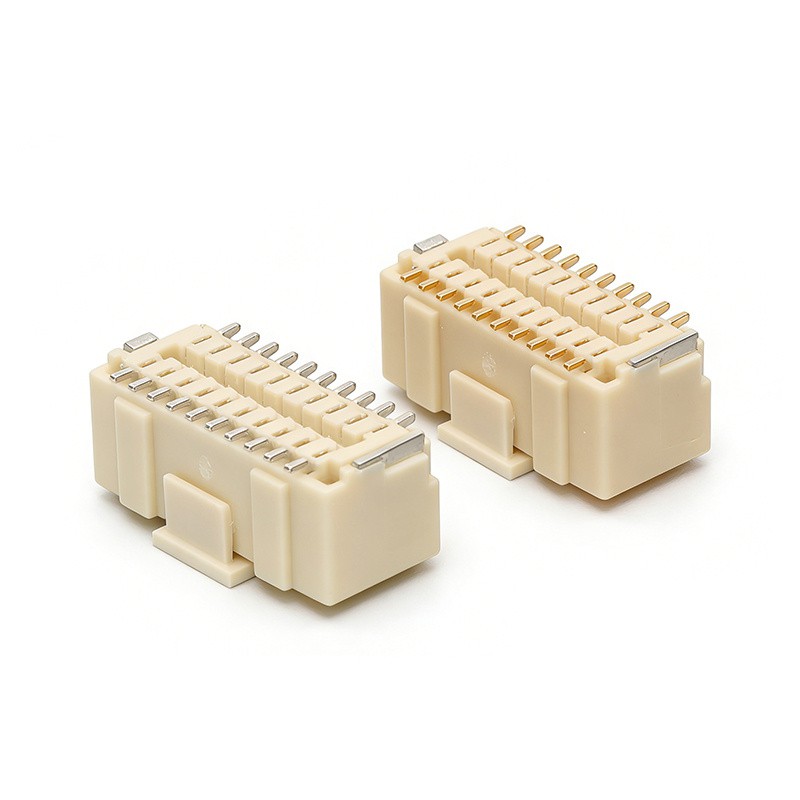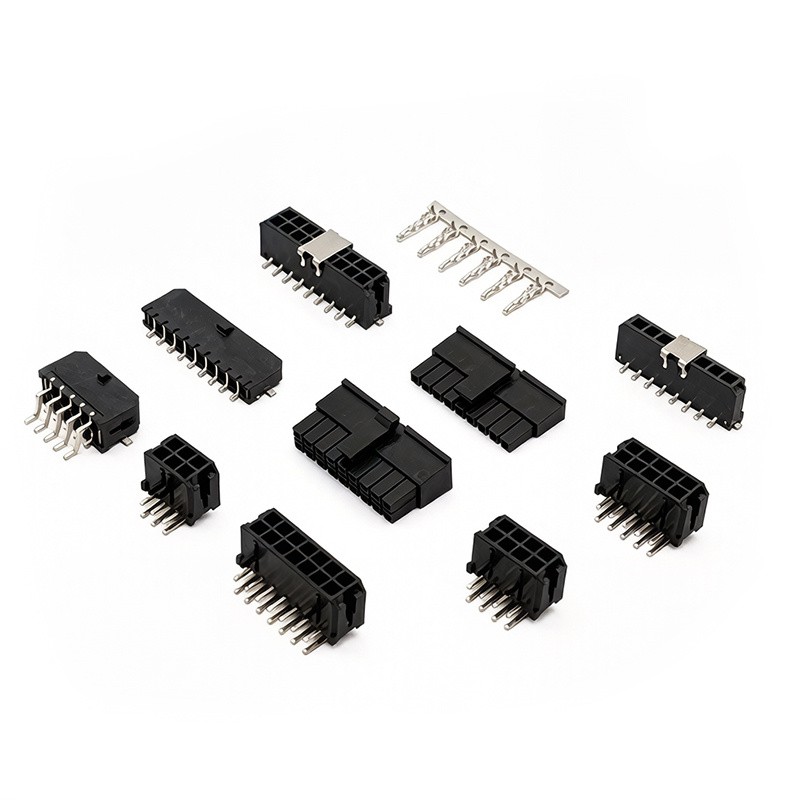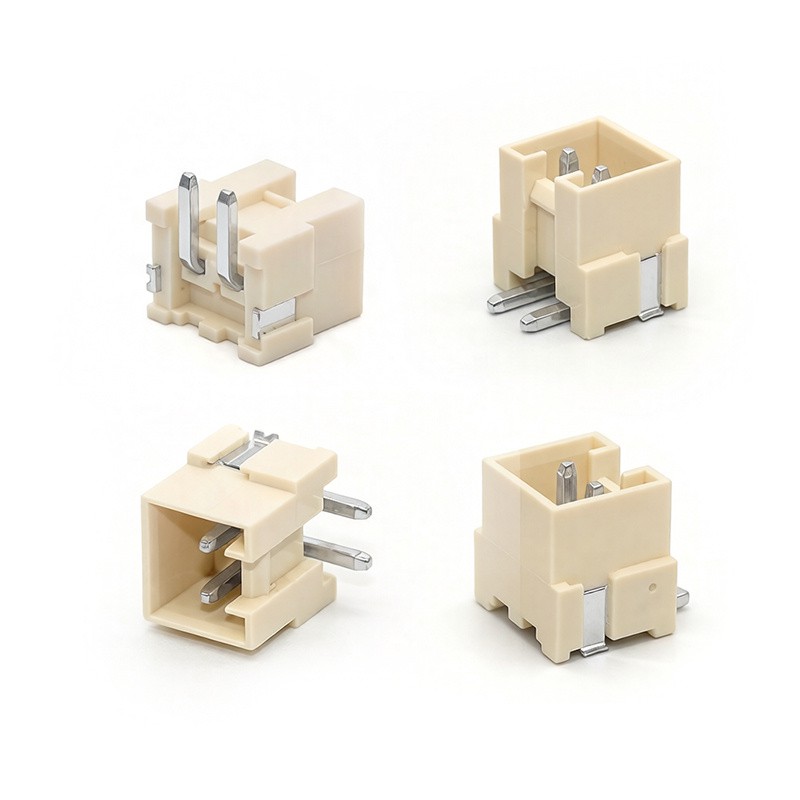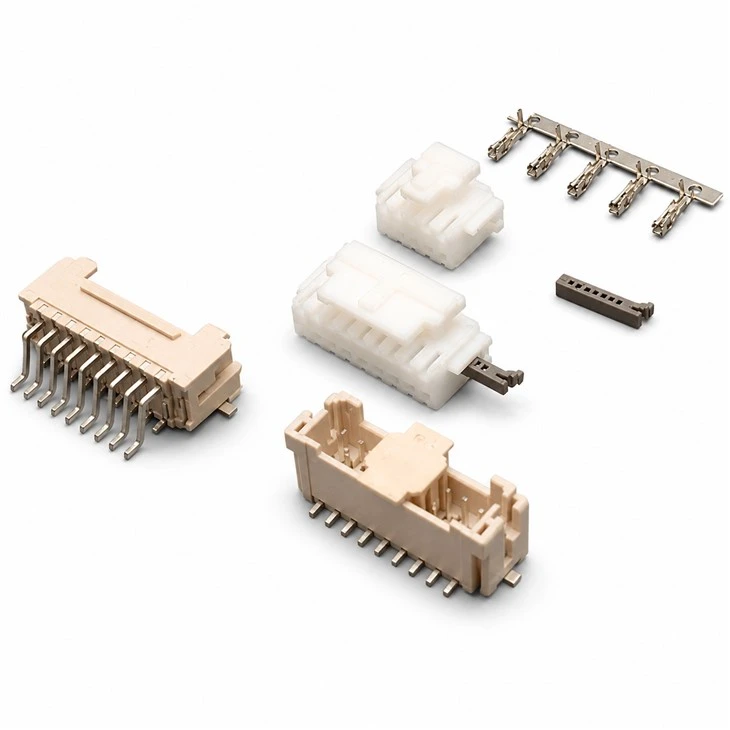

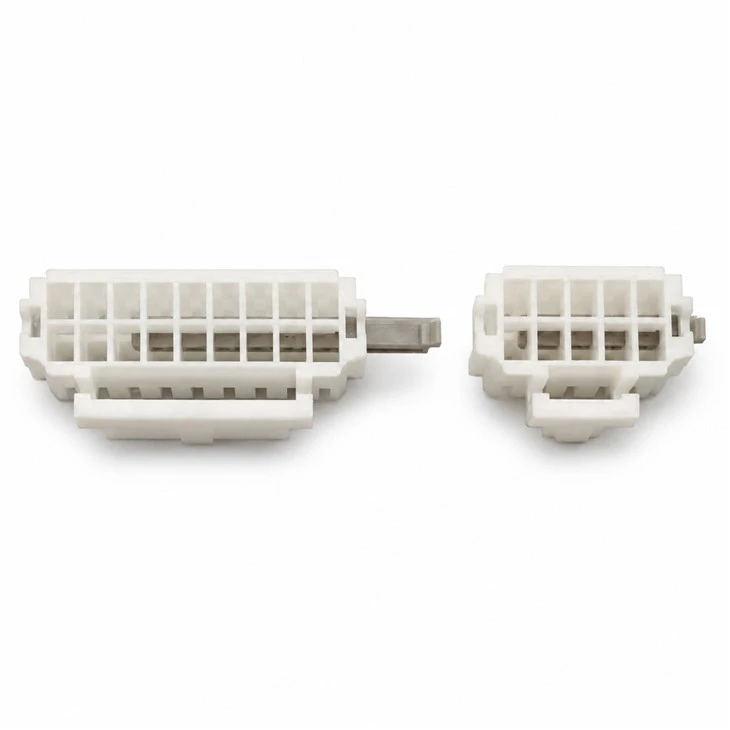
A2004-QA2014: 2.0 mm pitch car headlight bulb connector
Product Features
A2004-QA2014 Series (Compatible with YEONHO-PHB/PHSD Series)
Designed specifically for wire-to-board applications, compatible with the YEONHO-PHB/PHSD series standards, the 2.0mm pitch design is suitable for compact circuit layouts. The latch mechanism eliminates the risk of accidental disconnection; the high-temperature-resistant engineering plastic housing, combined with phosphor bronze gold-plated contacts, ensures stable conductivity and corrosion resistance, easily withstanding environments ranging from -40°C to 105°C.Supports AWG 24–26 wire gauges, with multiple pin configurations (4–32 pins) available to meet connection requirements across diverse applications including automotive, industrial equipment and consumer electronics.
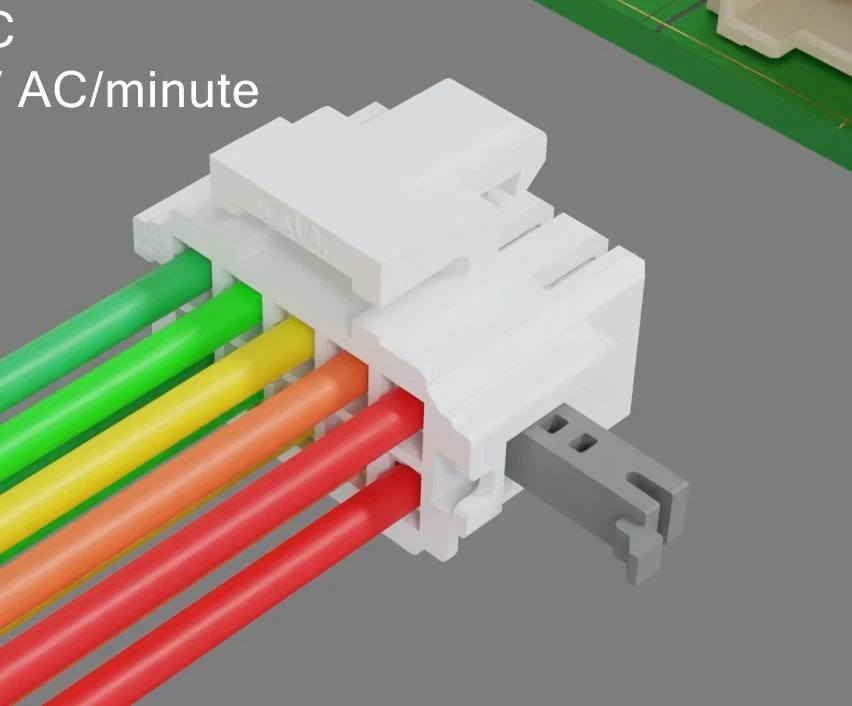
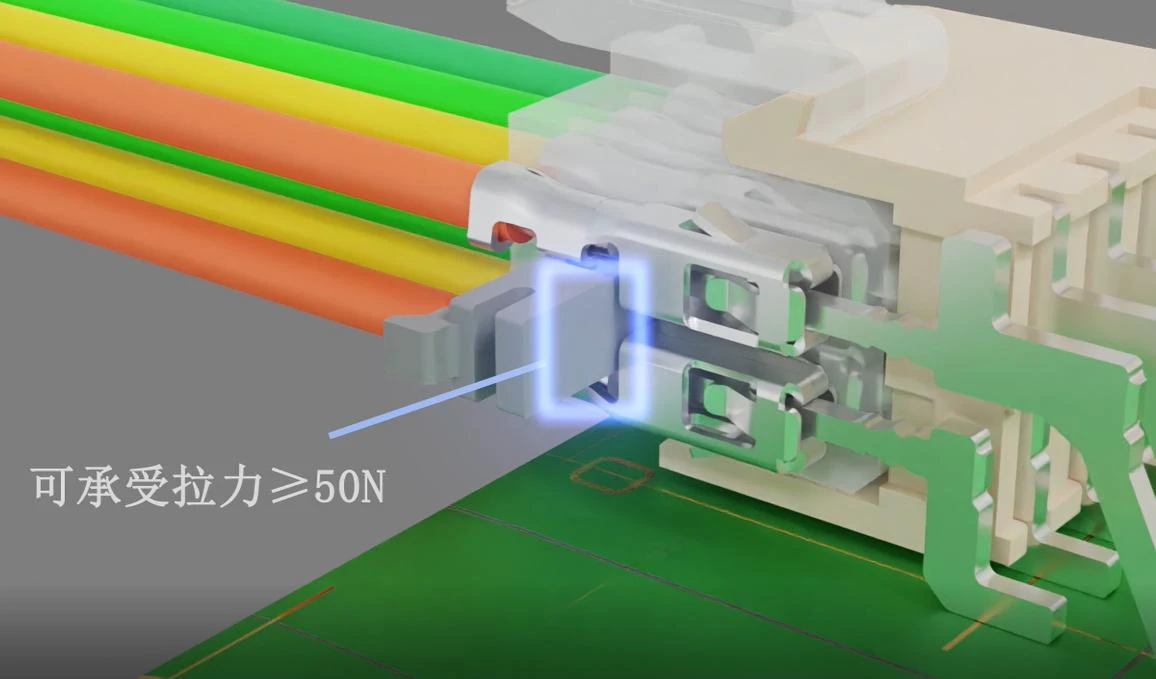
0.20mm Mini50 Terminals Cut Connector Package Size
The QA2003-2006 family uses the Molex Mini50 0.20mm terminal architecture. The interface occupies up to 50% less space than traditional USCAR 0.64mm systems, releasing PCB and housing area for additional headlight electronics.
Independent Secondary Lock and Polarized Mating
The terminal-retention lock remains engaged independently of the main housing latch, while mechanical polarization blocks the wrong mating orientation. Shock, vibration and assembly handling cannot release a terminal or mate the connector to the wrong keyed interface.
Applicable Standards
| USCAR 2.0, QC/T1067-2017 and other automotive standards | |
| Pitch | 2.0mm |
| Rated Current | 3A AC/DC |
| Rated Voltage | 250V AC/DC |
| Insulation Resistance | ≥100MΩ |
| Contact Resistance | ≤25mΩ |
| Withstand Voltage | 1000V AC/min |
| Temperature Range | -40℃~+105℃ |
Suitable wire gauge: AWG #24–26
This connector is specifically designed for board-to-board and wire-to-board connections in automotive electronics, consumer electronics, smart home appliances and similar applications, and is widely compatible with various signal and power connection requirements.
The product features a secondary locking mechanism to prevent disengagement and fully enclosed terminals on all four sides. With dual-sided contact between the pins and terminals, combined with an external hook interlock mechanism, it effectively withstands vibration and shock during vehicle operation, ensuring high retention force and contact stability.
With a 2.0mm pitch design, it supports a rated current of 2A AC/DC and a rated voltage of 250V AC/DC, with an insulation resistance of ≥100MΩ and a contact resistance of ≤25mΩ. It withstands a voltage of up to 1000V AC/minute and operates reliably within a wide temperature range of -40°C to +105°C.It is compatible with AWG #24–26 wire gauges, providing safe, stable and long-lasting electrical connection assurance for various electronic devices.
Production process
Jiankun's production process adheres to professional quality control standards for electronics manufacturing and is divided into three core stages: front-end manufacturing, mid-end manufacturing and quality control, and back-end warehousing and delivery, as detailed below:
Front-end Process: Component Forming
1. Terminal Stamping and Forming
Using high-purity copper strip as raw material, high-speed precision stamping equipment is employed to cold-form terminal blanks. The structural precision and mechanical strength of the terminals are strictly controlled, laying the foundation for subsequent electrical connection performance.
2. Terminal Electroplating
Surface treatments such as gold plating, tin plating and nickel plating are carried out by qualified external suppliers. This enhances the terminals' conductivity, oxidation resistance and insertion/withdrawal durability, whilst meeting industry environmental and reliability requirements such as RoHS and REACH.
3. Injection Moulding of Plastic Housings
Engineering plastic pellets (such as PA66 and LCP) are melted at high temperature using precision injection moulding machines and injected into moulds to form the connector housing, ensuring dimensional stability, insulation performance and temperature resistance.
Mid-stage Processes and Quality Control
1. Automated Assembly
High-speed insertion equipment is used to precisely insert and lock the electroplated terminals into the injection-moulded housing, thereby forming the connector's electrical connection structure. The entire process is monitored by a vision positioning system to ensure assembly accuracy.
2. CCD Vision Inspection
A high-resolution CCD vision inspection system is utilised to perform automated inspection and yield screening for connector cosmetic defects (such as terminal deformation or flash on the plastic housing) and dimensional accuracy (such as terminal alignment deviation), with a detection accuracy of up to ±0.01 mm.
3. Tape and Reel Packaging
Qualified products are packaged using carrier tapes and cover tapes to meet the SMT automated placement process requirements of downstream customers, whilst preventing damage during transport and storage.
4. Final 100% Inspection
Through a combined 100% inspection comprising 'manual visual inspection and electrical performance testing', we verify the connector's core electrical parameters-such as electrical continuity, withstand voltage and insulation resistance-to ensure the product complies with industry quality system requirements such as IATF 16949.
Back-end Warehousing and Delivery
1. Batch Receipt Management
Qualified products are scanned into stock via the WMS (Warehouse Management System), enabling production batch traceability, real-time inventory control and First-In, First-Out (FIFO) management.
2. Order Fulfilment and Dispatch
Picking and preparation are carried out in accordance with customer order requirements, with dispatch arranged via the logistics system. Batch traceability reports and Certificate of Conformity (COC) are provided throughout the process to guarantee delivery timeliness and quality traceability.

Production Site
Jiankun Connectors' core production base operates under the IATF 16949 automotive quality management system, combined with the ISO 9001 general quality standard. Centred on the performance requirements of compact product structures and highly reliable connections, we have established a fully autonomous production chain covering "raw material processing – component forming – finished product assembly – quality inspection", and through specialised workshop zoning, precise division of labour and the use of intelligent equipment, we ensure controllable quality and efficiency at every stage, providing robust hardware support for high-end applications across the automotive, medical and digital sectors.
Injection Moulding Workshop: High-precision automated moulding, laying a solid foundation for the quality of micro-structural components
As the core operational unit of the "injection moulding raw materials division", the injection moulding workshop focuses on the precision moulding of plastic structural components such as connector micro-housings and internal latches. Throughout the process, it aligns with the design requirements for compactness and high rigidity:
- Equipment and Process Control
- Process Quality Verification
Stamping Workshop: Precision Copper Strip Processing, Empowering the Core Performance of Micro Terminals
As the key processing area within the "copper strip raw materials division", the Stamping Workshop specialises in the precision stamping of micro-terminals, providing the core substrate assurance for the product's electrical performance, characterised by low contact resistance and high connection stability:
- Equipment and Raw Material Configuration
- Process Coordination Assurance
Assembly Workshops I & II: Automated Integrated Assembly, Achieving Closed-Loop Process Quality Control
Assembly Workshops I and II focus on core assembly processes. Through the deployment of multiple intelligent automated production lines, they receive qualified components from the stamping and injection moulding processes to complete core procedures such as terminal crimping and component integration, whilst simultaneously ensuring precise verification throughout the assembly process:
- Automated Precision Assembly
- Integrated In-line Inspection
End-to-End Autonomous Production Layout: Dual Assurance of Efficiency and Quality
The facility centres on an end-to-end autonomous production layout, breaking down barriers across all stages from raw material processing and component forming to finished product assembly. Through a digital management system, all workshops share production data, enabling precise traceability of raw material batches, equipment parameters and inspection data for every batch.This integrated layout not only shortens production cycles to meet the bulk delivery requirements of clients across multiple sectors, but also establishes a fully controllable quality management system through standardised processes and comprehensive, end-to-end inspection.

Packaging & Transportation
Standardised Packaging Design
JKUN adopts industry-standardised packaging solutions. Products are neatly packed into dedicated cartons according to their specifications and, once packed, are uniformly secured onto pallets. This ensures products are stacked neatly whilst facilitating forklift handling, significantly enhancing operational efficiency during warehousing and transit.
Storage Requirements
Products must be stored in their original, undamaged packaging at all times, and should be kept in a clean, dry warehouse. We recommend prioritising areas that are protected from light, with minimal temperature and humidity fluctuations and low humidity levels. Additionally, care must be taken to avoid external pressure or impact on the packaging to prevent damage that could affect product performance.
Flexible Transport Options
To meet diverse order requirements and logistics coverage, a variety of transport methods are available, including full-load road transport (lorries), international courier services (such as UPS, TNT, FedEx, EMS and DHL), air freight and sea freight, which can be flexibly adapted to suit specific circumstances.
Transport and Handling Precautions
- During transport, particular care must be taken to prevent the packaging from coming into contact with sharp objects and to avoid violent impacts, so as to prevent damage to the packaging that could affect product quality;
- Under normal transport and standard operating conditions, this product does not pose any undue health risks; however, safety during loading and unloading must be prioritised to prevent non-compliant operations;
- Packaging materials must be disposed of properly; indiscriminate disposal is strictly prohibited, and both environmental requirements and operational standards must be observed.

QA & QC
Our quality management system is built upon a framework of internationally recognised certification standards, establishing a three-pronged quality assurance model comprising "system certification endorsement + end-to-end process control + full lifecycle traceability". This ensures product quality remains stable and reliable, meets regulatory compliance and standards, and fully satisfies the market access requirements and application standards of diverse global markets.
Quality Assurance System Empowered by Authoritative Certifications
The company has established a multi-tiered compliance system covering quality, environmental and industry-specific areas. Through the dual support of standardised management systems and product certification, we have laid a solid foundation for product quality:
- IATF 16949 Automotive Quality Management System Certification
- ISO 9001 Quality Management System Certification
- ISO 14001 Environmental Management System Certification
- UL/CUL Product Safety Certification
- CE Product Compliance Certification
End-to-end closed-loop quality control measures
Leveraging an authoritative certification system, the company has established a seamless, end-to-end quality control mechanism covering the entire process from "incoming materials – production – finished products", enabling the precise interception of non-conforming items:
- Incoming Quality Control (IQC)
- In-Process Quality Control (IPQC)
- Final Product Inspection (FQC)
Full Lifecycle Quality Traceability and Continuous Improvement
The company has established a unique batch identification traceability system for products. Through batch codes, full-chain traceability of raw material sources, production equipment, process parameters, testing data and operators is achieved, ensuring that quality issues can be precisely pinpointed and swiftly investigated.Furthermore, in accordance with the continuous improvement requirements of ISO 9001, we regularly collect customer application feedback and production process quality data to conduct systematic data analysis and process optimisation. This drives the dynamic enhancement of our quality management system and product quality, thereby continuously improving customer satisfaction.

Frequently Asked Questions
What is the standard lead time?
-
Standard orders are completed within 7-10 days after order confirmation.
Can I get samples for vehicle fit testing?
-
Yes. We provide up to 10 free standard samples. You only pay the shipping cost.
Which details are needed to match an existing vehicle harness?
-
Provide the OEM number, pinout, latch and keying details, wire gauge and connector photos.
Can both mating sides be supplied as one set?
-
Yes. We can supply the matching male and female housings with the required terminals, locks and seals.
Hot Tags: car headlight connector types, China car headlight connector types manufacturers, suppliers, factory, automotive headlight connectors, Automotive Light Connectors, Car Bulb Connector, Car Headlight Bulb Connector, Car Headlight Connector, Headlamp Connector